








Can You Buy Real Estate in Dubai with Cryptocurrency?
Short answer: yes — but with important structure, checks and regulated partners. Dubai has built a legal and operational framework so buyers can fund property purchases using crypto assets. That does not mean that title deeds are denominated in Bitcoin or that developers typically keep crypto on their balance sheets; instead, purchases are executed through conversion, escrow and (in some pilots) tokenisation under regulated programmes. This article explains how the process works in 2026, cites the legal context, shows practical steps, compares options and offers an actionable checklist for prospective buyers.
Why Dubai has become crypto-friendly (legal backbone)
Dubai established a dedicated virtual-assets regulator by law (Law No. 4 of 2022) and created the Virtual Assets Regulatory Authority (VARA) to license exchanges, custodians and OTC/VA service providers — a major reason regulated crypto payment routes are now available. (rulebooks.vara.ae)
Separately, the Dubai Land Department (DLD) launched a Real Estate Tokenisation Project pilot on 19 March 2025 and moved to Phase II on 9 February 2026; Phase II enables resale in the secondary market beginning 20 February 2026 and has opened tokenised trading capacity within a regulated sandbox. The DLD also projects meaningful market scale for tokenised real estate as the initiative develops. (dubailand.gov.ae)
How buying with crypto typically works (practical flow)
In practice there are three common payment routes today:
- OTC / regulated conversion — buyer transfers crypto to a VARA‑licensed OTC desk or exchange which converts the crypto into AED (or another agreed fiat) and the fiat is paid into the developer’s or seller’s escrow/account for registration. This is the most common route when developers “accept crypto” because the developer receives fiat while the buyer uses crypto to fund the purchase. (realestateclubdubai.com)
- Developer / broker channel — some developers and broker‑partners run tailored processes where crypto payments are accepted for select projects and routed through licensed crypto partners to settlement accounts. These are usually project‑ or buyer‑specific arrangements rather than blanket policies. (homecubes.io)
- Tokenisation / real‑world asset (RWA) — DLD’s tokenisation pilot issues digital tokens representing title interests; Phase II allowed secondary resale for tokens released within the pilot. Tokenised ownership is a distinct model and is being tested under strict regulatory rules. (dubailand.gov.ae)
Key practical steps you will see in most transactions:
- Agree terms with developer/seller and confirm they accept crypto-funded purchases or tokenised participation (some projects are crypto-enabled, many are not). (homecubes.io)
- Use a VARA‑licensed Virtual Asset Service Provider (VASP) or an OTC trading desk to convert crypto to AED; the licenced provider performs KYC/AML and issues settlement funds. VARA’s rulebook and public register list authorised players. (rulebooks.vara.ae)
- Receive a fiat manager’s cheque or a bank transfer to the developer’s escrow or the buyer/seller’s RERA‑approved bank account; final title registration with DLD is in AED. (dubailand.gov.ae)
- Complete DLD registration and obtain the title deed (or tokenised proof where applicable). Tokenised transfers in the DLD pilot are governed by the project rules. (dubailand.gov.ae)
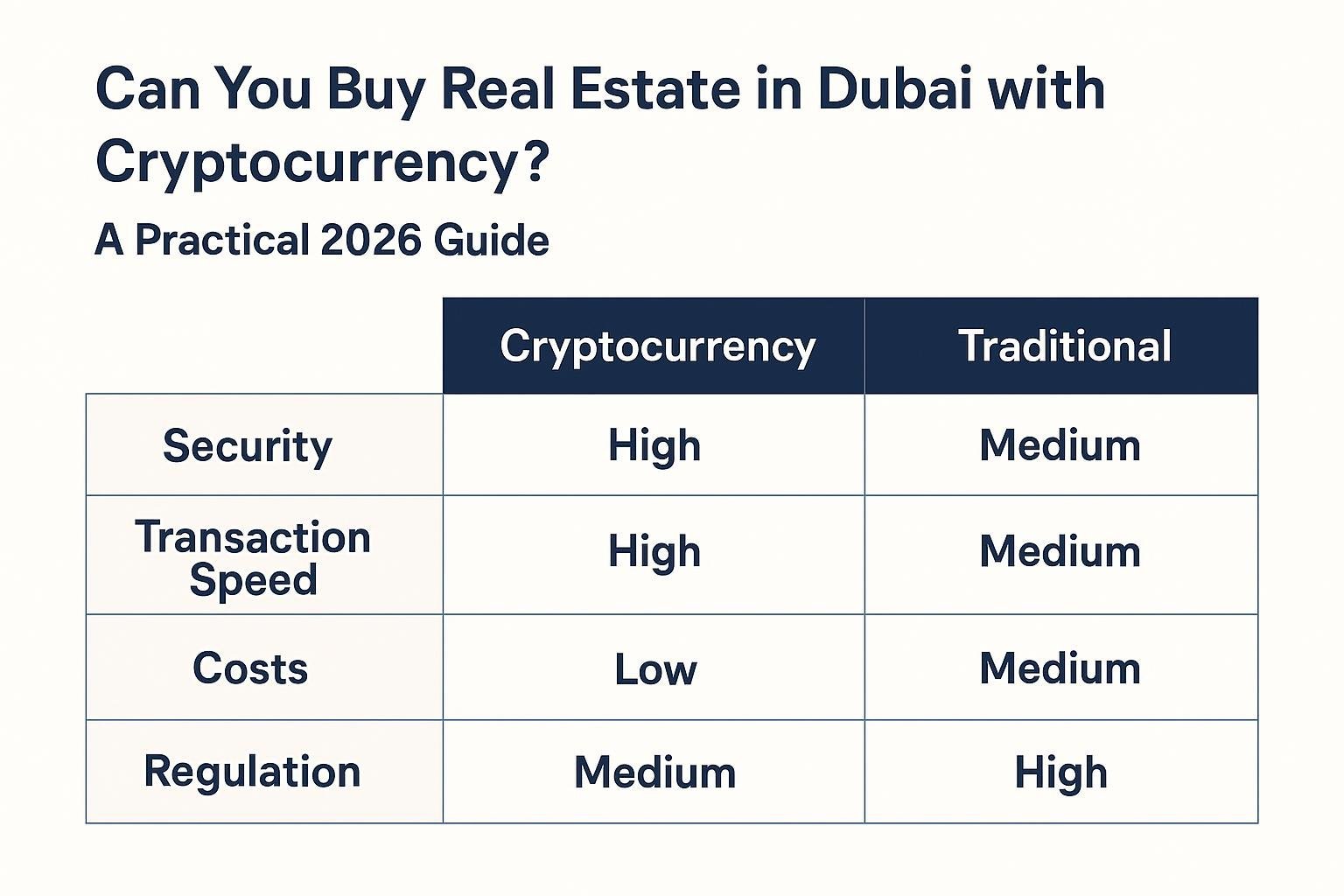
Market data comparison / Data Snapshot
Snapshot (selected, verifiable figures as of sources cited):
- DLD pilot launch: 19 March 2025 (Real Estate Tokenisation Project pilot). (dubailand.gov.ae)
- DLD Phase II announcement: 09 February 2026; resale activity enabled from 20 February 2026 with ~7.8 million tokens activated in the pilot framework. (dubailand.gov.ae)
- VARA established under Law No. (4) of 2022 and operates the Dubai virtual‑asset rulebook and licensing. (rulebooks.vara.ae)
- UAE VAT / tax clarifications: Federal Tax Authority issued clarifications and amendments (Cabinet Decision No. 100 of 2024 and subsequent FTA public clarifications) that affect VAT treatment of certain virtual‑asset services; buyers should confirm VAT and tax positions with a tax adviser. (pwc.com)
Data snapshot table
| Payment model | Who holds crypto? | Settlement currency | Typical regulatory gate |
|---|---|---|---|
| OTC / licensed conversion | Buyer -> VASP/OTC | AED (fiat to escrow) | VARA‑licensed VASP & bank AML checks |
| Developer channel (project-specific) | Buyer -> partner (processed to AED) | AED (developer receives fiat) | Developer / broker compliance + VASP partner |
| Tokenised (DLD pilot) | Token platform custody (tokenised title) | Tokenised units / underlying AED value | DLD tokenisation rules + VARA oversight |
Pros, risks and practical cautions
Why buyers use crypto: speed (when using OTC), access to new investor pools, and the ability to move value across borders efficiently. Dubai’s regulated approach and DLD tokenisation pilot also create new opportunities for fractional investment. (realestateclubdubai.com)
Key risks and cautions:
- Volatility — unless you use a stablecoin or convert immediately, crypto price moves can materially change your effective purchase value.
- Counterparty and custody — ensure the VASP/OTC partner is VARA‑licensed (or otherwise regulated) and that the developer’s escrow is RERA/DLD‑approved. (rulebooks.vara.ae)
- AML / source‑of‑funds checks — expect enhanced due diligence: banks and regulators will require identity, proof of origin for crypto funds and compliance documents before settlement or mortgage approval. (homecubes.io)
- Tax and residency linkage — while the UAE historically has no personal income/capital gains tax, crypto activities can have VAT or business tax implications depending on how they are carried out; confirm with a qualified tax advisor. (pwc.com)
Practical next steps for buyers
If you want to buy Dubai property with crypto, follow this checklist:
- Confirm the property/developer accepts crypto-funded purchases or participates in the DLD tokenisation pilot (project listing or broker confirmation). (homecubes.io)
- Choose a VARA‑licensed VASP or an OTC desk (review VARA public register) and request their settlement flow and KYC requirements. (rulebooks.vara.ae)
- Ask your bank and the developer for the exact settlement route: which escrow account, required documentation and whether a currency conversion manager’s cheque is needed. (homecubes.io)
- Obtain an AML/source‑of‑funds pack from your VASP that the bank will accept; prepare certified IDs and proof of crypto provenance. (realestateclubdubai.com)
- Engage a Dubai‑licensed lawyer or conveyancer to review contract wording related to crypto settlement and escrow protections. Do not sign until the settlement mechanics are fully documented.
- Plan the tax and residency implications with an international tax adviser in your home jurisdiction as well as in the UAE. (pwc.com)
FAQs
Q: Will the developer ever keep my Bitcoin or Ether?
No — most developers will receive AED (fiat) into escrow. Crypto is normally converted to AED by a licensed intermediary before the developer receives funds. Some tokenised models may use digital token ownership, but title registration with DLD is ultimately recorded under the rules of the tokenisation pilot. (homecubes.io)
Q: Can I use crypto to get a mortgage in Dubai?
Banks lend in AED and require standard mortgage documentation. A crypto sale can fund a deposit, but lenders will typically require that funds are converted and source‑of‑funds are clearly documented. Speak with lenders early in the process. (realestateclubdubai.com)
Q: Is buying with crypto legal?
Yes — provided the payment is processed through regulated channels (VARA‑licensed providers where applicable) and DLD’s registration rules are followed. Tokenisation is operating in a regulated pilot. Always document compliance steps with legal counsel. (rulebooks.vara.ae)
Q: Do I owe tax if I sell crypto to buy property in Dubai?
The UAE generally does not levy personal income or capital gains tax for individuals, but VAT and corporate tax rules can apply in specific circumstances and tax positions vary by residency and home‑jurisdiction—get specialist tax advice. (pwc.com)
Final takeaway
Buying property in Dubai with cryptocurrency is a live, regulated option for well‑prepared buyers in 2026. The technically correct model is a crypto‑to‑fiat settlement (or tokenised purchase under DLD’s pilot), with strong regulatory oversight from VARA and the DLD’s tokenisation framework. If you’re serious, start by confirming project acceptance, choose a licensed VASP/OTC partner, prepare robust source‑of‑funds documentation, and engage a Dubai conveyancer and tax adviser before committing funds. This approach keeps the opportunity accessible while managing legal, regulatory and market risks.
Disclaimer: This article summarises public information and is not legal or tax advice. Always consult licensed Dubai lawyers, tax advisers and VARA/DLD‑approved service providers before transacting.
Want help with this Dubai property question?
Share your goal, budget, and preferred area. Real Dubai Deals can help you understand the next practical step.