




If you’ve been tracking LEED certified properties in Dubai, you already know this isn’t a niche interest anymore — it’s now the law. Starting January 2026, Dubai’s 2040 Urban Master Plan formally mandates LEED Gold+ compliance for all newly constructed towers. That single regulatory shift is quietly rewriting the rules of real estate investment in the emirate, creating a two-tier market where certified buildings command dramatically higher rents and resale values while older, non-certified stock gradually loses its appeal.
This guide breaks down exactly what the mandate means, the ROI data behind green-certified investments, the best communities to target, and how to position your portfolio before the full effect of this policy plays out over the next three to five years.
What Is the 2026 LEED Gold+ Mandate and Why Does It Matter?
LEED — Leadership in Energy and Environmental Design — is the internationally recognised green building certification system administered by the U.S. Green Building Council. Buildings are rated Silver, Gold, or Platinum based on their energy efficiency, water conservation, indoor air quality, materials sustainability, and site management practices.
Dubai has been encouraging sustainable construction under the Al Sa’fat and Estidama frameworks for years, but the 2026 upgrade is categorically different: it removes developer discretion. Any tower granted a new permit from January 2026 onward must achieve a minimum of LEED Gold. This isn’t a marketing badge — it’s a building permit condition.
For investors, this creates three compounding effects:
- Supply bifurcation — the city’s existing pre-2026 stock cannot be retroactively certified without significant capital expenditure. As a result, new certified supply and legacy non-certified supply will increasingly diverge in their rental and capital value trajectories.
- Regulatory tailwind — any project delivering at LEED Gold+ will be able to market a genuine, legally-verified advantage rather than a greenwashing claim.
- Institutional demand — multinational corporations with ESG mandates increasingly require LEED-certified office and residential space for their employees, concentrating high-quality tenant demand into the certified segment.
The ROI Case: What the Data Actually Shows
The most frequently cited figure comes from CBRE’s research on Dubai’s commercial market: LEED-certified office buildings command an average rental premium of 33% over non-certified equivalents in the same submarket. For residential, the premium is more moderate but still material — studies across Singapore, Dubai, and Mumbai show green-certified apartments and villas consistently achieving 10–20% higher rents than comparable non-certified units.
Let’s translate those percentages into numbers. Consider two apartments in Business Bay:
- Non-certified unit: AED 120,000/year rent → 6.0% yield on AED 2,000,000 purchase price
- LEED Gold unit (same size, same area): AED 138,000–144,000/year → 6.9–7.2% yield on comparable pricing
That 0.9–1.2% yield differential compounds significantly over a ten-year hold. Add capital appreciation that tends to outpace non-certified buildings by 10–15% over the same period — partly because institutional buyers pay a premium at exit — and the investment case becomes compelling on a risk-adjusted basis.
Key ROI Benchmarks for LEED-Certified Communities (2026)
| Community | Certification | Price Range (AED) | Gross ROI | Green Premium |
|---|---|---|---|---|
| Sustainable City Dubai | LEED Platinum | 800K–5M | 6–9% | 15–20% |
| Tilal Al Ghaf | LEED Gold | 3M–10M | 5–7% | 10–15% |
| Dubai Creek Harbour | LEED Gold+ | 1.2M–6M | 6–8% | 12–18% |
| Business Bay (new towers) | LEED Gold | 1M–4M | 6.5–7.5% | 10–14% |
| Dubai Hills Estate | LEED Silver–Gold | 1.5M–8M | 5.5–7% | 8–12% |
Why Multinational Tenants and ESG Funds Are Driving the Premium
One underappreciated driver of the LEED premium in Dubai specifically is the behaviour of institutional tenants. Multinational corporations — particularly in finance, technology, consulting, and energy — increasingly operate under corporate sustainability commitments that require their office and residential leases to sit inside certified buildings. HSBC, Deloitte, Microsoft, and numerous large-cap firms openly publish requirements for LEED Gold-minimum premises when selecting Dubai offices or executive housing for senior staff.
This creates a structural quality-of-tenant advantage for LEED landlords. Multinational tenants tend to sign longer leases, pay above-market rents, cause less wear and tear, and reduce void periods. For individual investors, holding a unit inside a LEED Gold tower in Business Bay or DIFC-adjacent Business Bay puts you in direct competition for these tenants rather than relying solely on the retail rental market.
On the capital side, sovereign wealth funds and cross-border real estate funds with ESG mandates are actively filtering out non-certified assets from their acquisition pipelines. This directly affects exit liquidity: a LEED-certified apartment in a quality project will attract a broader pool of institutional buyers at exit, typically at tighter yield compression — meaning a higher capital value — compared to a similar-sized non-certified unit.
Best Areas to Target for LEED-Certified Property Investment in Dubai
1. Dubai Creek Harbour
Emaar’s flagship district is designed from the ground up to LEED Gold specifications. The combination of waterfront lifestyle, proximity to Downtown, and a master developer with institutional-grade delivery standards makes this one of the most liquid LEED investment corridors in the city. Off-plan entry prices remain below Downtown equivalents, and the area’s infrastructure build-out is accelerating ahead of the 2030 timeline originally set by the master plan.
2. Business Bay (Post-2026 Towers)
Business Bay is the city’s highest-density mixed-use submarket, with direct connections to Downtown and the Burj Khalifa. Pre-2026 stock in Business Bay is a mixed picture — some older towers have minimal efficiency standards. The post-2026 mandatory LEED Gold pipeline here creates a measurable quality divide. Targeting new launches with LEED certification documents (not just marketing language — request the LEED registration certificate from the developer) gives you a product that can command the top 15% of rental rates in this corridor.
3. Sustainable City Dubai
The original LEED Platinum community in Dubai remains a benchmark case study. Zero-energy homes, electric vehicle infrastructure, rooftop solar, and car-free community zones have sustained consistent demand from environment-conscious tenants and buyers. Capital values here have appreciated faster than the city average over the past four years. Resale supply is limited, which is both a liquidity consideration and a price-support mechanism.
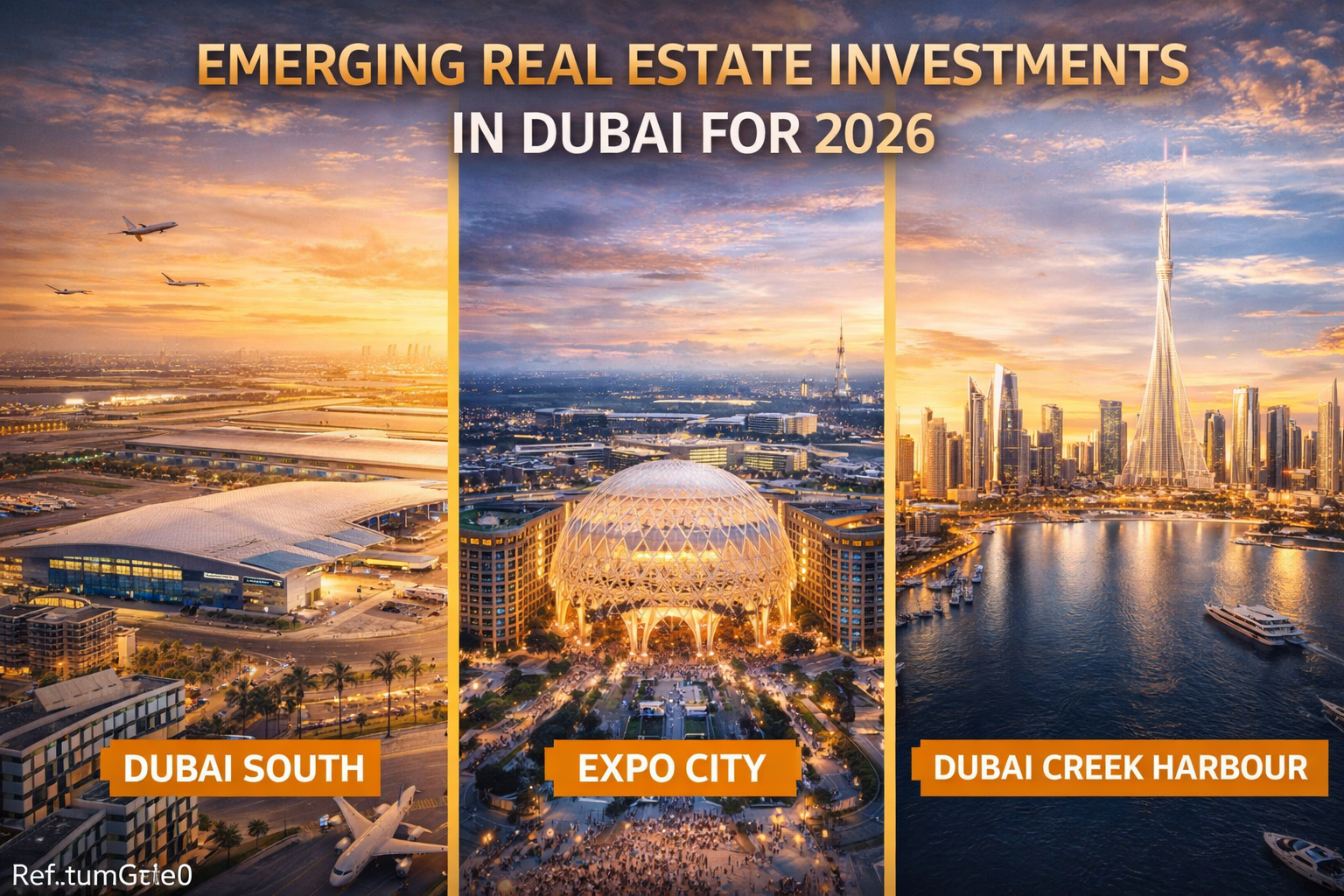
4. Dubai South and Expo City
The legacy infrastructure of Expo 2020 — designed to LEED Gold — is being converted into a mixed-use district under the Expo City brand. The proximity to Al Maktoum International Airport (scheduled for major expansion by 2030) makes this a medium-term capital appreciation story. Entry prices are among the lowest per square foot for certified stock in Dubai, and long-term supply is capped by the master plan.
How to Verify LEED Certification Before You Buy
This is a critical due diligence step that most investors overlook. LEED certification exists on a spectrum: a project can be registered for LEED (which means an application has been filed but nothing has been verified) or actually certified (which means it has been independently audited and the rating awarded). Off-plan projects often advertise LEED-registered status in their marketing — this is technically accurate but incomplete.
To verify genuine certification status:
- Request the GBCI certification letter — the Green Business Certification Inc. issues formal certificates with a unique project ID. Any genuinely certified project can provide this document.
- Search the LEED project database at usgbc.org — all certified projects are publicly searchable by name, address, and owner.
- Check the certification level — Silver, Gold, or Platinum. The 2026 mandate requires Gold minimum. Silver-certified projects do not meet the new benchmark and will not benefit from the same institutional tenant demand.
- Confirm the certification scope — some projects achieve LEED for the building shell only. If the fit-out is your responsibility, understand whether interior fit-out standards are specified and what that means for tenant expectations.
For a broader framework on evaluating off-plan project risk before committing, our guide on 18 parameters to de-risk any off-plan project covers developer track record, escrow account management, and payment plan structures in detail.
The 2026–2030 Outlook: Where the Green Premium Goes From Here
The medium-term trajectory for LEED-certified property values in Dubai is shaped by two converging forces. First, new supply entering the market from 2026 onward will universally carry LEED Gold+ status — which means the premium currently enjoyed by certified buildings will normalise as the certified segment grows. This is not necessarily negative for existing certified stock: as the overall quality baseline rises, buildings that deliver LEED Platinum or that sit in premier certified master communities will occupy the new top tier.
Second, the UAE’s Net Zero 2050 strategy will introduce progressively stricter energy performance requirements at each building permit renewal cycle. Buildings that fail to meet updated energy codes will face either mandatory retrofit costs or functional obsolescence. Investors who hold certified stock will avoid these upgrade burdens; those holding legacy non-certified units will face an increasing maintenance capital requirement to keep rents competitive.
The net effect: the gap between certified and non-certified real estate performance will likely widen rather than narrow through 2030. Positioning now, while off-plan LEED Gold projects still offer entry prices comparable to non-certified alternatives, is the asymmetric trade the data supports.
For an overview of how Dubai’s broader market is positioned relative to other global investment destinations, see our analysis on why Dubai real estate outperforms London, Singapore, and New York.
Frequently Asked Questions
Does LEED certification apply to all property types in Dubai?
The 2026 LEED Gold+ mandate primarily applies to new residential towers and commercial buildings receiving permits after January 2026. Standalone villas, low-rise developments, and certain community typologies may fall under different but related sustainability frameworks such as Al Sa’fat. When reviewing any project, confirm directly with the developer which specific certification framework applies to their approval.
Is a LEED Silver building still a good investment?
LEED Silver properties do carry some efficiency premium over entirely non-certified buildings, but they fall below the new regulatory baseline for buildings permitted from January 2026. Institutional tenant criteria and ESG fund mandates typically require Gold minimum. Silver-certified buildings deliver moderate benefits but will not fully capture the institutional demand premium that Gold and Platinum-certified properties attract.
Can I get a mortgage for a LEED-certified property in Dubai?
Yes. LEED certification status does not affect mortgage availability. Standard UAE mortgage criteria apply — property value, LTV ratios, borrower income, and residency status. Our full breakdown of how to get a mortgage as an expat in Dubai covers all lender requirements and documentation in detail.
Which Dubai developers are building LEED Gold+ projects in 2026?
Emaar Properties, Aldar, Nakheel, DAMAC (select projects), and several boutique luxury developers have confirmed LEED Gold-compliant project pipelines for 2026 and beyond. Always request the LEED registration or certification documentation from the developer’s project team rather than relying solely on marketing materials.
How does the green rental premium affect my rental yield calculation?
When underwriting a LEED-certified investment, it is reasonable to use rental comparables from other certified buildings in the same submarket rather than blended area averages. Blended averages include older non-certified stock, which will suppress your yield estimate relative to the performance you are likely to achieve. Always segment your comparable set by certification status when running rental projections.
Final Takeaway
The LEED Gold+ mandate is not a future risk to manage — it is a present opportunity to capture. LEED certified properties in Dubai already deliver measurably higher rents, attract institutional-quality tenants, and command better exit multiples. The regulatory change from January 2026 accelerates this trend by ensuring that every new unit entering the market will carry some level of certification, raising the overall quality of the city’s housing stock while simultaneously creating a performance hierarchy between legacy and new-build assets.
Investors who identify quality LEED Gold and Platinum projects now — verifying certification status, developer track record, and submarket fundamentals — are likely to look back on 2026 as an ideal entry vintage for this specific thesis. The window before the mandate’s effects are fully priced into off-plan values is narrowing.
Have a project in mind that claims LEED certification? Contact our team and we can help you verify the documentation and assess the investment case.