

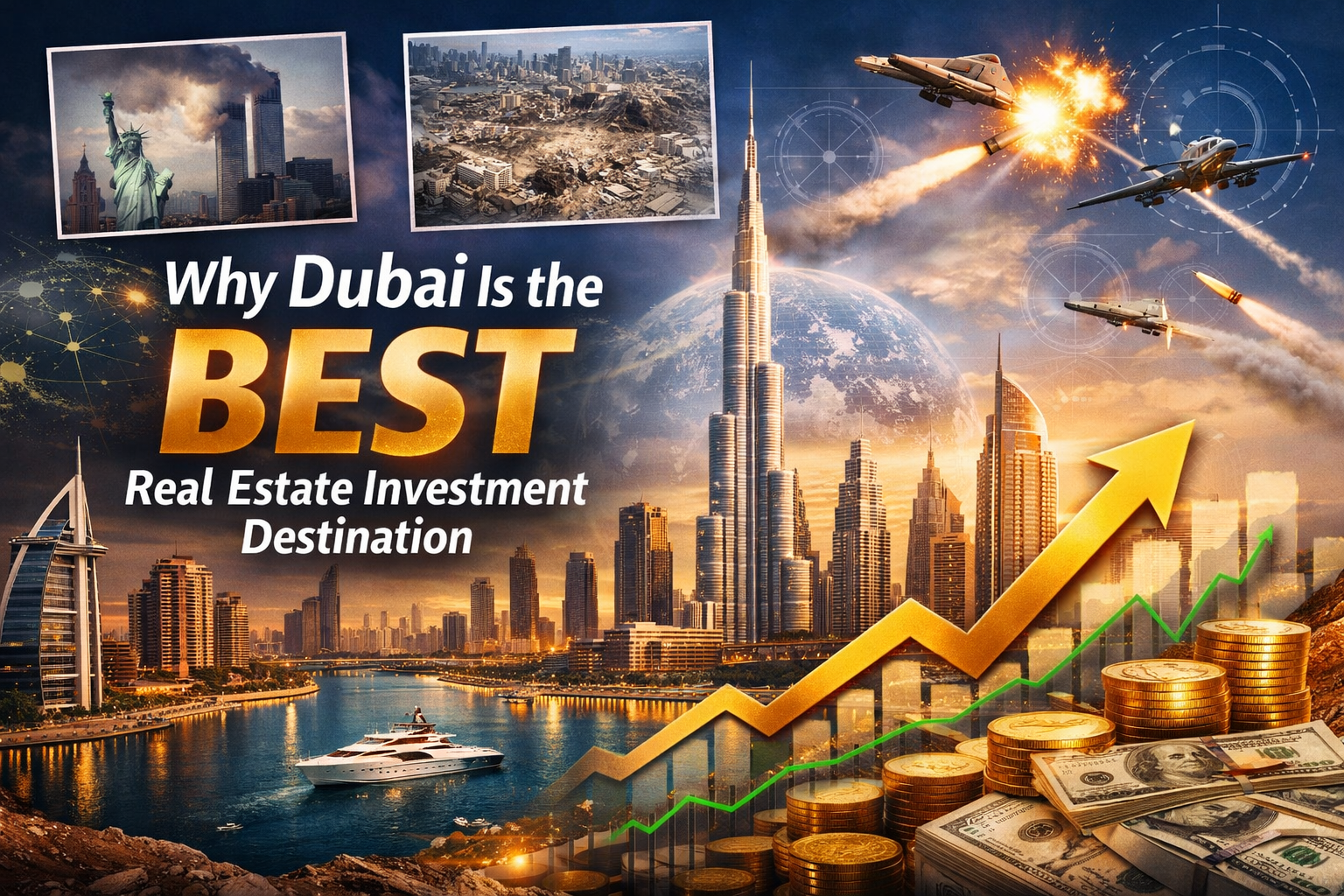

Introduction: Are You Investing, or Just Buying What’s Already Popular?
Most people do “real estate investing” like this:
- They look at where their friends live.
- They search for apartments in communities that are already fully developed, buzzing, and Instagram-famous.
- They pay today’s premium price for yesterday’s growth.
That’s not investing. That’s buying at the end of the movie.
Serious investors ask a different question:
“Where will Dubai’s money, infrastructure, and population go next – and how can I enter before an area becomes ‘prime’?”
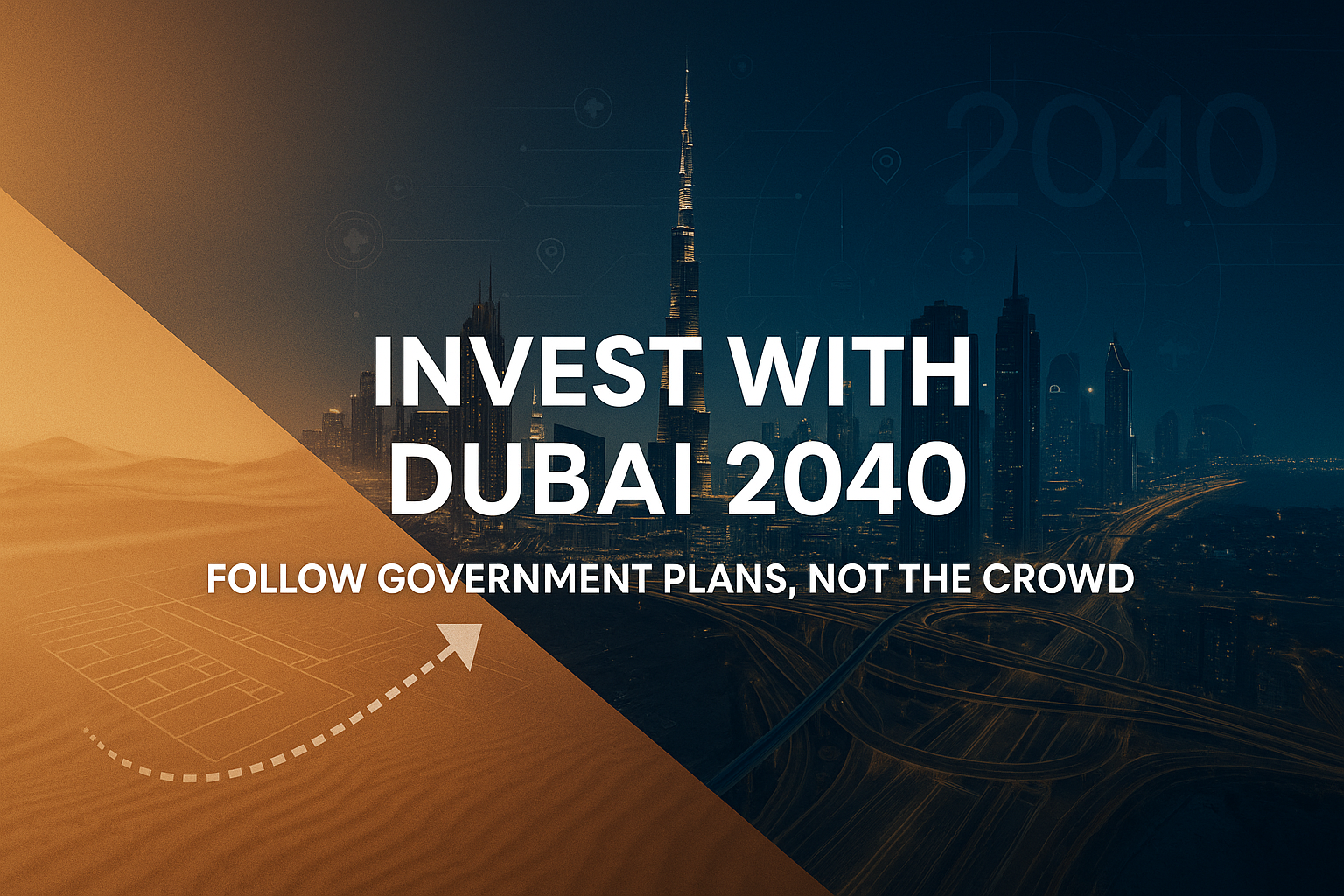
Dubai has literally published the answer: the Dubai 2040 Urban Master Plan. It’s a 20-year roadmap that almost doubles Dubai’s population, expands green and beach areas dramatically, and channels growth into five main urban centres and new corridors. U.AE+2Dubai 2040+2
Your job as an investor is simple:
read this plan like a treasure map, position yourself early in the right corridors, and exit once the rest of the market “wakes up”.
1. Why “Already Developed” Areas Often Give You the Worst Risk–Reward
Let’s be clear: places like Downtown, Marina, JBR, Palm Jumeirah are fantastic locations. They rent well, are globally recognized, and are relatively safe.
But if your goal is high upside, they have three problems:
- You’re paying for fully baked value
- Metro is already running, malls are open, schools and hospitals are in place.
- All this is already priced into the sqm price.
- Future upside is slower and more conservative
- You go from “multipliers” to “gradual increases”.
- Great for capital parking, not great for aggressive growth.
- Competition is strongest where everyone wants to buy
- You compete with end users, flippers, funds, holiday-home operators, everyone.
- Harder to find truly mispriced deals.
You don’t make big money buying the finished Palm.
You make big money buying when it was still sand and a vision.
2. How Dubai 2040 Completely Changes the Game for Investors
Dubai 2040 is not just a planning document. It’s a commitment.
Key numbers and priorities you need to understand:
- Population nearly doubling
Plan envisions Dubai hosting around 5.8–7.8 million residents by 2040, up from ~3.3m. Dubai 2040+1 - Five main urban centres
The city’s growth is organized into five key hubs (old Dubai, downtown business centre, Dubai Marina/JBR, new growth around Expo / Dubai South, and future corridors). U.AE+2Lucidity Insights+2 - Huge increase in green & recreational space
Green / recreational areas and nature reserves will cover around 60% of Dubai’s land, with green leisure areas more than doubling. U.AE+2betterhomes+2 - Public beaches to increase by ~400%
Palm Jebel Ali and other coastal projects directly support this, adding around 110 km of coastline and new beach destinations. Binaa Investment+4Lucidity Insights+4Provident Estate+4 - Major focus on transport & aviation
Al Maktoum International Airport (Dubai South) is being expanded with a ~AED 128 billion terminal, targeting up to 150–260 million passengers per year, with operations shifting from DXB by around 2032. The Times of India+5DAEP+5Dubai Airports+5
Dubai is basically saying:
“We are going to push people, jobs, tourists and capital into specific corridors and support them with insane infrastructure.”
Your edge as an investor is to front-run this movement.
3. The Core Strategy: “Government First, Investor Second”
Here’s the mental model you want your blog readers to remember:
Don’t follow influencers. Follow infrastructure.
3.1 The Four Questions to Ask Before You Buy
Whenever you look at a community or off-plan project, ask:
- Is this area explicitly supported by Dubai 2040 (or a sub-plan)?
- Mentioned in Dubai 2040, Hatta Plan, Dubai South, Palm Jebel Ali, etc.? venturesonsite+5U.AE+5Dubai 2040+5
- Is there real, funded infrastructure under way – not just a brochure?
- Roads tendered, airport expansion contracts awarded, new metro or bus corridors announced. Off Plan Projects+2Reuters+2
- Where is this area in the 4-phase growth cycle?
(We’ll break that down shortly.) - What’s my exit trigger – price, timeline, or infrastructure milestone?
- “I will exit when: airport Phase 2 opens / first mall launches / ROI falls below X% / by year Y.”
Once you can answer these four, your decision becomes logical instead of emotional.
4. The 4 Phases of a Growth Area (and When to Enter)
Phase 1 – Vision & Hype (Highest Risk, Highest Story)
- Ruler / government announces a big idea.
- Beautiful renders, videos, slogans.
- Land is cheap, but execution risk is maximum.
- Many small, speculative players appear; some won’t survive.
You need deep pockets and patience to enter here.
Phase 2 – Infrastructure & Serious Developers (Best Risk–Reward)
- Roads, utilities, bridges, and bulk infrastructure work actually start.
- One or more top developers commit huge land and launch serious projects.
- Government keeps speaking about the area; new sub-initiatives appear.
This is usually the sweet spot:
- Risk is way lower than Phase 1.
- Prices are still early-stage.
- You can buy good stock, not leftovers.
Phase 3 – Community Takes Shape (Mass Adoption)
- Schools, malls, hospitals, hotels, and public beaches come online.
- Rents stabilize, occupancy is strong.
- End users start buying aggressively.
- Developers launch non-stop; every agent is marketing the area.
Upside is still there, but it’s no longer asymmetric.
Flippers can make money; long-term hold is safe but not explosive.
Phase 4 – Mature / Prime
- Area is considered “blue chip” or “prime”.
- Yields compress.
- Growth is slower and more stable.
- Great place to park wealth, not so great to chase big growth.
Your strategy:
Buy mainly in Phase 2, sometimes in early Phase 3, and exit between late Phase 3 and early Phase 4.
5. Dubai 2040 in Action: Three Big Corridors to Watch
You can turn this part into separate sub-blogs later.
5.1 Palm Jebel Ali – The New Waterfront Giant
Palm Jebel Ali is not a random project – it’s one of the flagship implementations of Dubai 2040.
Key facts:
- Size: about 13.4 sq km, roughly twice Palm Jumeirah. Binaa Investment+5Harper Wellington+5BSL Group UAE+5
- Coastline: adds around 110 km of new shoreline to Dubai. Homes 4 Life Real Estate+3Palm Jebel Ali+3Provident Estate+3
- Capacity: designed for ~35,000 families and 80+ hotels & resorts, with a focus on sustainability and 30% of public facilities on renewable energy. Homes 4 Life Real Estate+3Palm Jebel Ali+3venturesonsite+3
Why it fits the 2040 play:
- Supports the 400% public beach increase target. betterhomes+3Provident Estate+3Lucidity Insights+3
- Anchors the western urban centre around Jebel Ali and the coastal corridor.
Where is it in the 4 phases?
- Announced long ago, relaunched with a clear masterplan and active projects.
- Infrastructure and early phase sales are underway.
- Serious developers and large-ticket villas/townhouses already reserved / under sale.
It’s in Phase 2 → early Phase 3.
What a smart investor does:
- Targets waterfront or near-water units with realistic service charges and strong developers.
- Buys with a 7–12+ year view, not a “2-year flip” mentality.
- Sets exit triggers like:
- When key hotels open and global PR explodes.
- When resale prices reach a target per-sqft.
- When yield falls below a certain threshold because prices outrun rents.
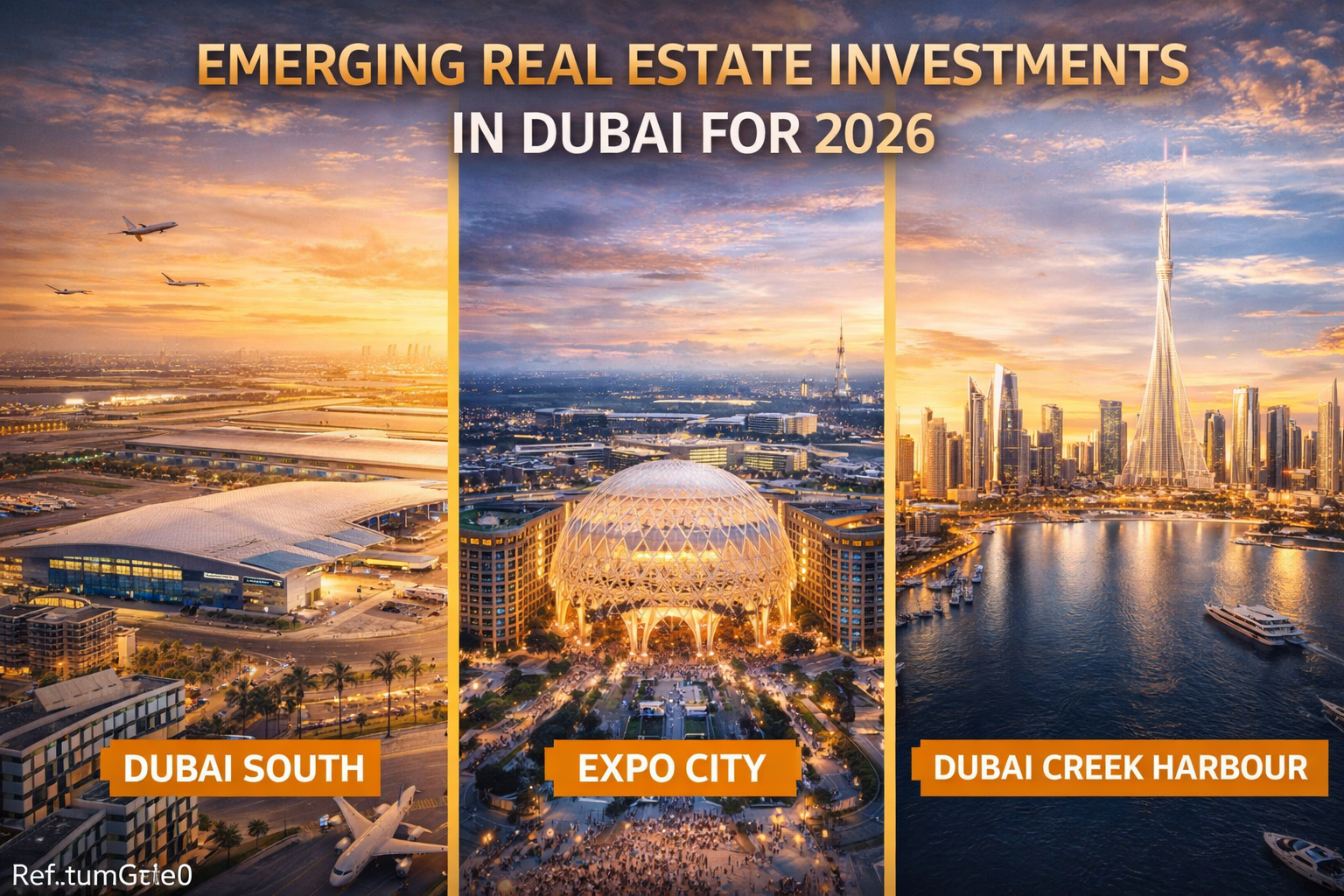
5.2 Dubai South & Al Maktoum International – The Airport City Play
Dubai is not expanding one more “random community” here. It’s building the world’s largest airport hub.
Key facts:
- Al Maktoum International Airport (DWC) expansion budget ~AED 128 billion (~$35bn). Reuters+1
- Target capacity: around 150–260 million passengers per year at full build-out. Orla Properties+5Dubai Airports+5AP News+5
- Entire Dubai South masterplan (~145 sq km) structured as an airport city with multiple industry districts (logistics, residential, commercial, aviation). Arab Urban Institute+2Orla Properties+2
This is textbook “follow infrastructure”:
- Airports drive jobs, hotels, warehouses, staff accommodation, and executive housing.
- Government has fixed a clear timeline: major capacity milestones around 2030–2035. REDHORIZON+5AP News+5The Times of India+5
Where is it in the phases?
- Core airport exists (Phase 2), but full expansion is underway towards Phase 3.
- Many surrounding communities are still undervalued relative to future passenger and job numbers.
What a smart investor does:
- Looks for good developers and communities in:
- Dubai South residential districts.
- Nearby logistics / staff hubs with strong rental demand.
- Buys with 8–12 year runway tied to airport milestones:
- Phase 2 completion targets (e.g., 150m pax),
- Movement of traffic from DXB to DWC.
5.3 Hatta – The Eco-Tourism and Nature Play
Hatta is officially written into Dubai 2040 via the Hatta Master Development Plan, focusing on:
- Preserving natural environment.
- Building Hatta as a top eco/adventure tourism destination.
- New attractions: lakefront areas, cable car, hiking, hospitality projects, heritage sites. BNW Developments+5Dubai 2040+5Dubai Municipality+5
This is not a classic residential investment like JVC.
This is:
- Hospitality
- Short-term stays
- Eco-lodges
- Outdoor leisure developments.
Where is it in the phases?
- Masterplan approved, major projects announced – Phase 1–2.
What a smart investor does:
- Thinks hospitality or mixed-use, not random apartments in the middle of nowhere.
- Times entry around:
- Infrastructure works (roads, viewing points, cable car stations).
- New hotel/operator announcements.
This is high-conviction but niche. Perfect to mention in your blog as a “satellite bet” for experienced investors.
6. Micro-Level Filters: Once You Pick the Corridor, How Do You Pick the Project?
Even if you follow Dubai 2040 perfectly, you can still lose money by picking the wrong product.
Teach your readers to apply three layers of filtering:
6.1 Developer & Track Record
- Prior projects delivered on time or late?
- Quality of finishing and MEP?
- History of service charge disputes or major defects?
In early-stage areas (Phase 2), developer risk = project risk.
No matter how good the corridor is, a weak developer can kill returns.
6.2 Product–Location Fit
Ask:
- Does this property match the area’s future demand?
- Near large airport → staff housing, mid-priced apartments, budget hotels.
- Luxury waterfront → villas, branded residences, serviced apartments.
- Eco-tourism zone → cabins, resorts, lodges.
If the area screams “airport workforce and cargo logistics” and you’re buying an ultra-luxury 6BR villa in the wrong pocket, you’re betting against reality.
6.3 Numbers: Yield, Service Charges, Liquidity
- Yield: Run conservative scenarios with slightly lower rents and slightly higher service charges.
- Service Charges: New mega-projects can have high OPEX; that’s fine for luxury, but it must be reflected in your yield expectations.
- Liquidity: Is there a resale market already? Are big agencies actively listing and selling there, or are you stuck with 2–3 small brokers?
You want to be in a future growth corridor with today’s realistic, boring numbers, not fantasy spreadsheets.
7. Example Scenarios: Applying the Strategy to Different Investor Profiles
You can keep this in the blog or spin it into a separate piece.
Investor A – Budget AED 700k, Wants Higher Growth (10-Year View)
- Wrong move: Buy an overpriced small studio in Marina at low yield just to “own in Marina”.
- Smarter move:
- Identify early-stage Dubai South projects from solid developers.
- Or early-stage community around a confirmed infrastructure node (near future metro/airport corridor).
- Focus on good layouts and mid-market rentability.
Exit when:
- First major airport phase completes and rents step up, or
- Capital value doubles, even if yield compresses.
Investor B – Budget AED 2–4M, Wants Combination of Lifestyle + Upside
- Wrong move: Buy the last remaining average unit in an already saturated prime tower.
- Smarter move:
- Select a Palm Jebel Ali villa or townhouse in a promising cluster (waterfront or close to main attractions), from a top developer.
- Accept slightly lower initial yield; you are playing the re-rating of the whole island once hotels, beaches, and branding fully hit.
Exit when:
- The island transitions from “upcoming” to “must-have” and prices catch up with Palm Jumeirah-type sentiment.
Investor C – Advanced Investor, Wants a Thematic Bet
- Looks at Hatta and eco-tourism, or niche hospitality near major green corridors / outdoor destinations.
- Understands that demand is more volatile and seasonal, but uses Dubai 2040 as conviction that tourism and nature-based assets will be structurally supported.
8. Common Traps When Using Dubai 2040 as a Buzzword
Your blog becomes stronger if you also warn people honestly:
- Using ‘Dubai 2040’ as an excuse to buy any random off-plan “in the desert”
- If there’s no clear link to the official plan or key infrastructure, it’s marketing, not strategy.
- Ignoring your holding power
- Plans run to 2040. If you can only hold for 3 years, don’t buy something that needs 15 years to mature.
- Believing every launch price is justified ‘because 2040’
- Developers can and do overcharge when hype is high.
- If the launch price already prices in 10 years of growth, your upside is gone.
- No exit plan
- If you don’t define your personal “sell” conditions, you’ll hold through peak and down-cycles out of emotion.
9. A Simple Pre-Investment Checklist You Can Turn Into a PDF Lead Magnet
End your blog with a simple checklist (and then reuse this as a downloadable):
Before I invest in any Dubai property:
- ✅ I know which Dubai 2040 corridor this asset aligns with.
- ✅ I can point to specific infrastructure/projects already underway (airport, palm, tourism plan, transport).
- ✅ I’ve identified the area’s current phase (1–4).
- ✅ I’ve chosen a developer with a proven track record.
- ✅ The property type fits the likely future demand (airport staff vs luxury tourists vs families vs eco-tourists).
- ✅ My yield, rent and exit price assumptions are conservative, not fantasy.
- ✅ I’ve written down my exit conditions (price / ROI / time / milestone).
- ✅ If nothing goes as planned, I can still hold without being forced to fire-sell.
If all answers are honestly “yes”, you’re not just investing in Dubai – you’re partnering with the city’s own 2040 roadmap.
Conclusion: Stop Following the Hype – Start Partnering with the Plan
If you’ve read this far, you can already see the pattern:
- Buying in fully developed communities gives you comfort,
- But buying into future growth corridors – aligned with Dubai 2040 – gives you leverage on the city’s next chapter.
Dubai has done something very rare in the world: it has publicly shared a 20-year vision that covers:
- Where the city will expand,
- Which coastlines will be activated,
- Where new airports, ports, tourism hubs and eco-destinations will be built,
- How green spaces, beaches and transport networks will evolve,
- And how millions of additional residents and visitors will be absorbed into the urban fabric.
That is not just urban planning. For an investor, that is insider-level clarity – legally and publicly available.
You now have two very different ways to approach Dubai property:
- Emotional, crowd-driven investing
- Buy where it “feels” safe because everyone already lives there.
- Hope that prices continue to rise because they always have.
- Accept slower, more modest appreciation, and lower yields over time.
- Strategic, policy-driven investing
- Study Dubai 2040 and related mega-projects.
- Identify early- and mid-phase areas like Palm Jebel Ali, Dubai South, Hatta, and other designated corridors.
- Enter while infrastructure is being built and the story is still developing.
- Exit when the rest of the market finally sees what you saw years earlier.
The difference between these two approaches is the difference between:
- Being the first believer in Dubai Marina when it was still construction dust,
- Versus being the last buyer paying top dirhams once it’s fully polished.
Of course, strategy doesn’t mean fantasy. Even inside future corridors, you still need:
- Quality developers with a real delivery record,
- Properties that match the area’s likely demand (airport city vs eco-tourism vs luxury waterfront),
- Conservative rental and price assumptions,
- And a clear, written exit plan – whether based on time (5–10 years), milestones (airport phase, new mall, monorail, etc.) or returns (ROI dropping below your target).
Dubai will continue to grow, whether you invest or not.
The only question is how you choose to participate.
You can either keep buying at the end of the movie – in communities that are already perfect and fully priced…
Or you can start positioning yourself in the opening scenes of Dubai’s next big stories – where the government is committing billions, the cranes are going up, and the real upside still belongs to the early, informed investor.
If you align your portfolio with Dubai 2040 instead of social media trends, you stop guessing and start partnering with the very forces that create value in this city:
policy, infrastructure, population growth and long-term vision.
That’s how you don’t just own property in Dubai.
That’s how you grow with Dubai.